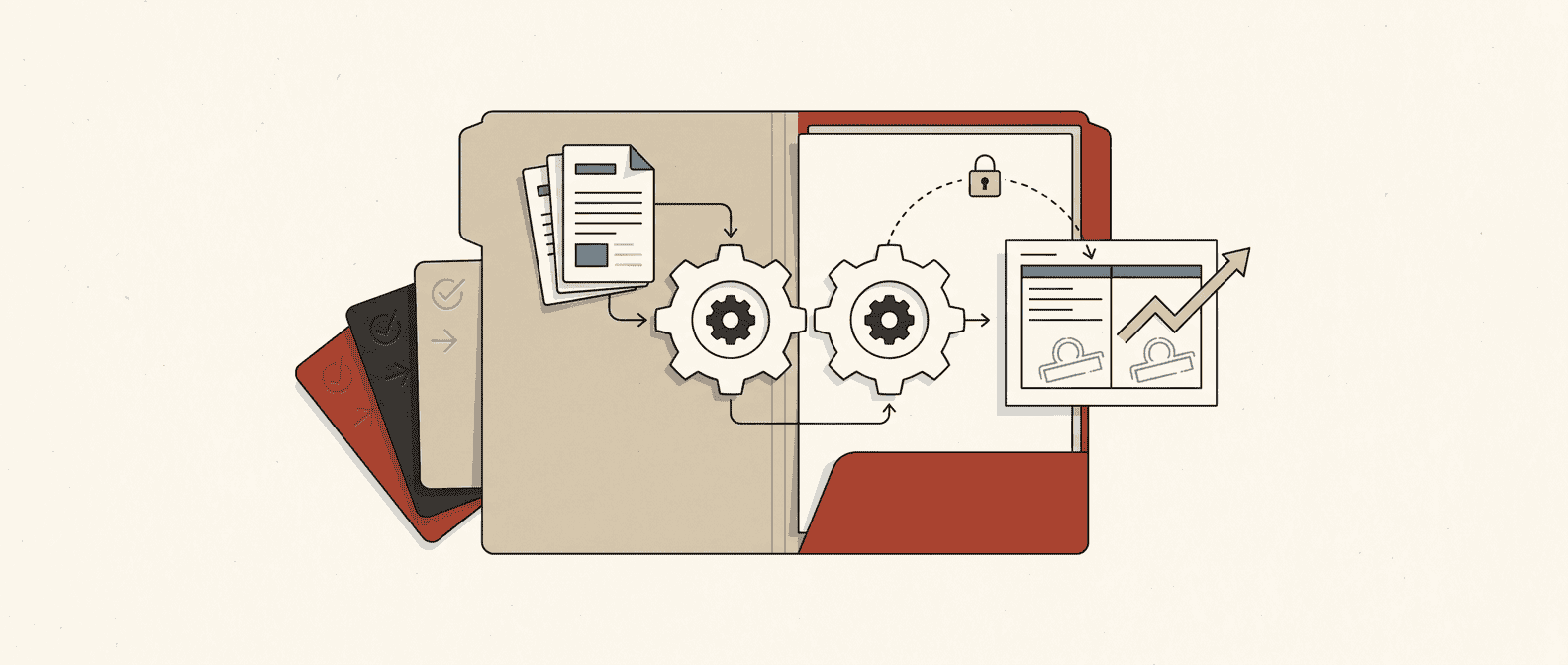
Finance operations teams do not need another partner who can say "NetSuite," "SAP," "Boomi," "Workato," or "API" in a sales deck. They need ERP data to move accurately between finance, CRM, billing, procurement, reporting, and AI workflows without breaking controls or creating a new reconciliation job.
ERP data sync automation is a partner-selection problem before it is a tool-selection problem. The hard parts are source-of-truth rules, object depth, field ownership, approval gates, exception handling, permissions, monitoring, and deciding who owns the workflow after go-live.
Short answer
The best ERP data sync automation partner depends on the shape of the finance workflow.
For focused production pilots across an existing stack, use a specialist automation implementation partner like Red Brick Labs. For NetSuite-centered companies, evaluate ERP partners such as RSM or Sikich, plus NetSuite-native integration specialists. For enterprise SAP, Oracle, Dynamics, or multi-ERP programs, evaluate Deloitte, Accenture, Protiviti, or certified system integrators around Boomi, MuleSoft, Workato, Celigo, and other iPaaS platforms. If the goal is analytics replication rather than operational write-back, bring in a data integration partner or internal data platform team.
The Red Brick Labs POV: choose the partner who can map the workflow and controls before they touch the connector. Connector fluency is table stakes. Finance-safe sync requires ownership rules, exception queues, audit trails, sandbox tests, monitoring, rollback plans, and a human review model for high-risk updates.
This partner guide pairs with the tool comparison in Best ERP Data Sync Automation Tools for Finance Operations Teams. For adjacent implementation context, read Best API Integration Partners for AI Automation Projects, Best CRM Data Cleanup Automation Partners for Revenue Operations Teams, How to Connect AI Agents to CRM and ERP Workflows, and How to Document Data Access Requirements for AI Workflows.
ERP data sync automation partner comparison table
Use this as the buyer-owned worksheet before taking partner sales calls.
| Partner type | Best fit | Strengths | Watch-outs | First deliverable |
|---|---|---|---|---|
| Specialist AI automation implementation partner | Finance teams with one urgent sync workflow across ERP, CRM, billing, procurement, docs, and AI tools | Workflow diagnosis, integration design, AI boundaries, human review, fast production pilots, owner handoff | Category quality varies; inspect production depth and control design | ERP data flow map, brittle-sync audit, pilot scope, control plan |
| ERP implementation partner | Teams whose sync rules are constrained by NetSuite, SAP, Oracle, Dynamics, Sage Intacct, Acumatica, or QuickBooks | ERP object knowledge, permissions, posting behavior, native configuration, accounting context | May overfit to the ERP and under-scope upstream workflow cleanup | ERP object/field map, source-of-truth rules, sandbox test plan |
| iPaaS implementation partner | Teams standardized on Workato, Celigo, Boomi, MuleSoft, SnapLogic, Jitterbit, Tray.ai, or similar | Connector depth, recipes, API patterns, integration governance, reusable components | Platform-first bias; every problem can become a platform project | Integration architecture, recipe/API inventory, release model |
| Enterprise systems integrator | Large finance transformation, multi-ERP, shared services, M&A, compliance, or global process programs | Scale, procurement comfort, change management, enterprise governance, partner ecosystem | Often too slow or broad for one focused finance workflow | Transformation roadmap, process design, target architecture |
| Finance transformation and risk advisory firm | Finance leaders redesigning close, reporting, controls, data, and automation together | Finance operating model, controls, data quality, compliance, executive alignment | May advise well but still need builders for production automation | Finance data/control assessment, automation roadmap |
| Data integration or analytics partner | Teams syncing ERP data into a warehouse, BI layer, forecasting model, or AI-ready dataset | ELT/ETL, modeling, reporting, warehouse governance, data observability | Not enough for operational write-back or approval workflows | Data model, pipeline design, reconciliation checks |
| Internal platform or data team with specialist support | Companies that want long-term integration capability as internal IP | Control, security, reusable patterns, institutional knowledge | Slower if finance requirements and agent controls are unclear | Architecture review, implementation plan, enablement handoff |
Do not compare these partner types as if they are interchangeable. A global SAP SI, a NetSuite solution provider, a Workato consultant, and a workflow-first AI automation pod may all be credible. They are credible for different jobs.
Best overall for focused ERP sync pilots: Red Brick Labs
Red Brick Labs fits the specialist implementation lane: finance workflow automation that works with the systems the team already runs.
That matters because the first useful ERP sync project is rarely "integrate finance." It is usually a narrow, painful workflow:
| Pilot layer | Practical first version |
|---|---|
| Trigger | Closed-won opportunity, approved vendor, invoice exception, billing event, close task, payment update |
| Systems | ERP, CRM, billing, procurement, AP tool, spreadsheet, data warehouse, Slack or Teams, document storage |
| Finance object | Customer, vendor, invoice, order, subscription, payment, product, project, department, class, subsidiary |
| Sync rule | Read-only, staged draft, human-approved update, bidirectional sync, batch replication, exception-only workflow |
| Human role | Approve high-risk writes, resolve mismatches, review AI suggestions, own exceptions |
| Controls | Least-privilege access, audit log, approval evidence, rollback, duplicate prevention, monitoring |
| Metrics | Manual touches removed, cycle time, failed sync rate, exception aging, close impact, rework avoided |
Red Brick Labs' blunt take: ERP sync automation should reduce reconciliation work, not move it somewhere less visible. If exceptions go back to email, the sync is unfinished. If nobody owns failed records, the workflow is not production-ready. If an AI agent can update ERP records without review gates and audit evidence, the design is too casual for finance.
Choose Red Brick Labs when:
- the workflow spans finance, revenue operations, procurement, legal, data, and IT;
- you need a working pilot in weeks, not a platform transformation program;
- AI may classify, extract, reconcile, draft, or recommend but humans need to approve risky actions;
- the team needs a partner to map requirements before buying another tool;
- ownership transfer matters after launch.
Book an ERP sync workflow audit: Red Brick Labs can map your ERP data flows, brittle sync points, ownership rules, exception paths, AI boundaries, and first production automation pilot before you commit to a platform or implementation partner.
Best for NetSuite-centered finance teams: RSM, Sikich, and NetSuite specialists
NetSuite-centered teams should usually shortlist ERP-specific partners before hiring a general automation shop. The reason is simple: NetSuite data sync often depends on records, subsidiaries, classifications, custom fields, SuiteScript/SuiteTalk behavior, approval workflows, saved searches, bundle decisions, and finance posting rules.
RSM's NetSuite page emphasizes more than 30 years of ERP and CRM experience, implementation methodologies, local support, and a large global NetSuite practice serving thousands of NetSuite clients. Sikich positions itself as a major NetSuite partner with implementation, optimization, and complex project delivery experience. NetSuite also maintains a broader partner program and partner network for implementation and related services.
Shortlist this category when:
- NetSuite is the finance system of record;
- the sync touches order-to-cash, subscription billing, procurement, AP, inventory, fulfillment, projects, or multi-entity finance;
- accounting rules matter as much as integration logic;
- finance wants configuration, training, and ongoing NetSuite support.
Watch-out: ERP partners can be excellent inside the ERP and weaker on upstream workflow automation. Ask how they handle non-NetSuite systems, AI review queues, failed sync ownership, monitoring, and finance-friendly change control.
Best for iPaaS-led integration programs: Workato, Celigo, Boomi, and MuleSoft partners
iPaaS implementation partners make sense when the company has already chosen, or is ready to standardize on, a platform.
Workato's ERP integration guidance emphasizes defining use cases, the applications involved, and non-functional requirements such as availability, security, and scalability. Celigo's NetSuite integration page highlights NetSuite expertise and many prebuilt NetSuite integrations. Boomi describes ERP integration as connecting business applications so relevant data flows into and out of the ERP. MuleSoft frames ERP integration around connecting ERP systems with CRM, BI, and other applications through APIs, middleware, and connectors.
That platform context is useful, but the partner still has to turn it into finance-safe implementation.
Shortlist an iPaaS partner when:
- the team already owns Workato, Celigo, Boomi, MuleSoft, SnapLogic, Jitterbit, Tray.ai, or a similar platform;
- ERP sync is one of many reusable integration patterns;
- IT wants governed APIs, recipes, environments, monitoring, and deployment practices;
- finance needs bidirectional operational sync, not just analytics replication.
Questions to ask:
| Question | Why it matters |
|---|---|
| Which ERP objects and custom fields have you implemented in production? | Connector logos do not prove object depth |
| How do you handle failed records and retries? | Finance sync failures should not disappear into logs |
| How do releases move from sandbox to production? | Close calendar changes need control |
| Can finance see exceptions without becoming an admin? | Business ownership needs usable queues |
| How do you separate read, write, approve, and admin permissions? | ERP credentials should not become a shared skeleton key |
Best for enterprise SAP, Oracle, Dynamics, and multi-ERP programs: Deloitte, Accenture, Protiviti, and enterprise SIs
Large finance organizations have a different problem. ERP sync is often tied to global process design, SAP S/4HANA or Oracle Cloud programs, Dynamics 365, shared services, controls, master data, M&A, and reporting architecture.
Deloitte's SAP alliance and ERP strategy material frame ERP transformation around finance modernization, SAP solutions, and getting the fundamentals in place. Accenture's SAP finance transformation case study points to flexible data architecture, automated capabilities, and AI-led processes inside a finance transformation context. Protiviti's finance technology and ERP consulting pages emphasize finance data, automation, cloud ERP, analytics, and end-to-end transformation of finance and business operations.
Shortlist this category when:
- the project spans countries, entities, business units, or shared services;
- ERP sync is coupled to a broader ERP implementation or modernization;
- audit, compliance, segregation of duties, master data, and change management are central;
- executive alignment and procurement process matter as much as build speed.
Watch-out: broad enterprise partners can turn a narrow sync bottleneck into a long program. If the pain is one order-to-cash or procure-to-pay sync, require a focused pilot path and clear success metrics before signing a broad transformation statement of work.
Best for warehouse, reporting, and AI-ready finance data: data integration partners
Not every ERP sync should write back to the ERP. Sometimes the right answer is a read-oriented data pipeline into a warehouse, reporting model, forecasting layer, or AI-ready dataset.
Use a data integration or analytics partner when:
- finance needs ERP, CRM, billing, payroll, procurement, and bank data reconciled for reporting;
- the destination is Snowflake, BigQuery, Databricks, Redshift, Power BI, Tableau, or a semantic layer;
- AI assistants need controlled read access to curated finance data;
- the workflow does not need to create or update ERP records.
This is where a partner may implement tools like Fivetran, Airbyte, CData, dbt, cloud data warehouses, or ERP-native exports. The partner should still prove reconciliation thinking. A beautiful dashboard that does not tie to the ERP is just a faster way to argue during close.
Partner selection scorecard
Use this scorecard before procurement. Weight the first five criteria heavily for finance operations.
| Criterion | Weight | Strong partner behavior | Red flag |
|---|---|---|---|
| Workflow diagnosis | 5x | Maps triggers, owners, systems, records, edge cases, current manual work, and business outcome | Starts with platform demos |
| ERP object depth | 5x | Understands customers, vendors, invoices, orders, payments, subsidiaries, dimensions, line items, attachments, and custom fields | Talks only about connector availability |
| Source-of-truth design | 5x | Defines which system owns each object and field, plus conflict rules | Lets every system update everything |
| Finance controls | 5x | Designs approval gates, segregation of duties, audit evidence, least privilege, and rollback | Treats controls as a later compliance step |
| Exception handling | 5x | Builds queues, owners, SLAs, retries, duplicate checks, and monitoring | Sends failures to a generic admin log |
| Integration architecture | 4x | Chooses iPaaS, API, native connector, data pipeline, or custom layer based on the job | Forces the preferred platform into every workflow |
| AI boundaries | 4x | Separates read, draft, recommend, approve, and write actions | Gives AI broad ERP access too early |
| Sandbox and QA | 4x | Tests realistic records, missing fields, duplicates, permissions, rate limits, and close calendar scenarios | Tests only happy paths |
| Speed to first value | 3x | Can scope a narrow production pilot with measurable outcomes | Turns discovery into months of theater |
| Ownership transfer | 3x | Trains finance and technical owners, documents safe changes, and leaves monitoring | Keeps every minor change dependent on the partner |
Scoring rule: multiply each score from 1 to 5 by the weight, then compare partner totals. Any partner scoring poorly on source of truth, controls, or exception handling should not own production ERP writes.
How to choose by finance workflow
| Workflow | Best partner shape | Why |
|---|---|---|
| Salesforce-to-ERP order-to-cash sync | Specialist automation partner, NetSuite partner, or iPaaS partner | Needs CRM/ERP ownership rules, product mapping, billing fields, exceptions, and write-back control |
| Vendor onboarding to ERP | Specialist automation partner or ERP partner | Needs tax, banking, duplicate, approval, and segregation-of-duties controls |
| AP invoice data into ERP | AP/finance automation partner, ERP partner, or specialist implementation partner | Needs OCR/extraction, coding, approval, exception, and posting controls |
| Close and reporting data sync | Data integration partner or finance transformation firm | Needs reconciled read pipelines, data models, and tie-out rules |
| Multi-ERP finance transformation | Enterprise SI or finance transformation firm | Needs process harmonization, governance, master data, and change management |
| AI assistant using ERP data | Specialist AI automation partner plus IT/data support | Needs permission boundaries, curated context, audit logs, and human approval gates |
Source notes
This article uses public vendor and partner pages as category evidence, not as proof that any named firm is the best fit for every buyer. RSM and Sikich are used as examples of NetSuite-focused implementation partners. Deloitte, Accenture, and Protiviti are used as examples of larger ERP, finance transformation, and technology advisory partners. Workato, Celigo, Boomi, and MuleSoft sources are used to understand integration-platform patterns that certified partners may implement.
No performance statistics are asserted without source support. Where this article makes a recommendation, it is Red Brick Labs' implementation POV based on finance workflow risk: source of truth first, controls before write-back, exceptions owned by a human, and monitoring from day one.
CTA: get a second opinion before the partner search hardens
If you are comparing ERP data sync automation partners, do not start with a logo grid. Start with one workflow that hurts.
Book a 15-minute ERP sync workflow audit. Red Brick Labs will help you map the current data flow, identify brittle sync points, decide whether you need an ERP partner, iPaaS partner, data partner, internal team, or specialist automation build, and define the first production pilot with controls.