CRM data cleanup is not a janitorial project. For revenue operations teams, dirty CRM data breaks speed-to-lead, territory assignment, enrichment, segmentation, account matching, lifecycle reporting, pipeline inspection, sales handoffs, and every AI workflow that depends on trusted records.
The hard part is not finding a duplicate record. The hard part is deciding which source wins, which fields can be overwritten, which merges need human review, which upstream systems keep creating the mess, and how to keep the CRM from decaying again next quarter.
Short answer
The best CRM data cleanup automation partner for a RevOps team is the one that can clean the current CRM and fix the operating system that made it dirty. For Salesforce-heavy teams, compare Salesforce-native cleanup specialists, platform services teams, and RevOps data platforms such as Cloudingo Services, Validity DemandTools, Traction Complete, Openprise, and Syncari. For HubSpot-heavy teams, compare HubSpot solutions partners, Insycle-style data management support, and RevOps agencies that understand CRM architecture, workflows, and integrations.
Use Red Brick Labs when the cleanup problem is connected to automation: messy handoffs, enrichment writebacks, routing rules, AI agents, CRM and ERP syncs, approval queues, or cross-system workflows. Use a point solution or CRM admin partner when the job is mostly dedupe, field normalization, import cleanup, or migration support inside one CRM.
This guide pairs well with our AI enablement partners for revenue operations teams, API integrations platform guide, best API integration partners for AI automation projects, how to connect AI agents to CRM and ERP workflows, AI workflow automation requirements template, and automation pilot intake template.
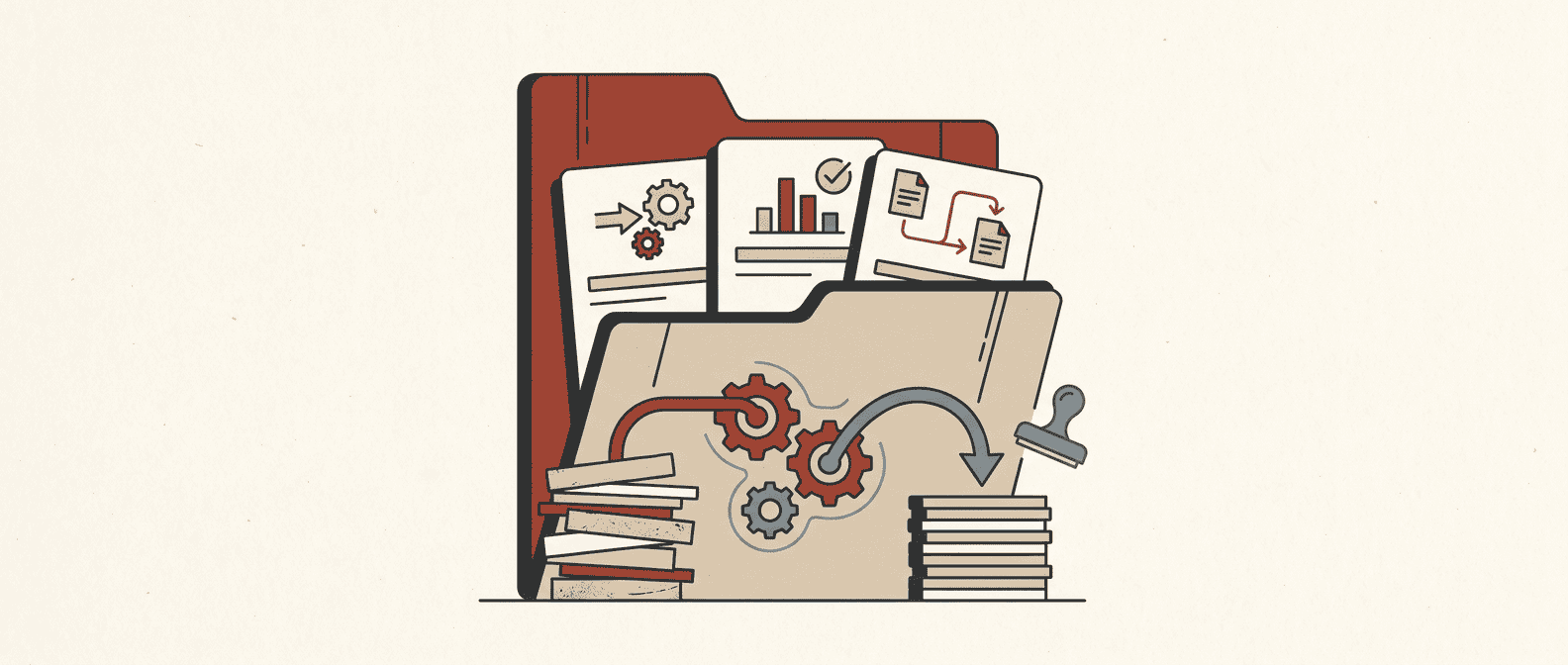
CRM data cleanup automation partner comparison
Use this table to pick the right partner category before you start vendor calls.
| Partner type | Best fit | Strongest cleanup jobs | Watch out for | First deliverable to ask for |
|---|---|---|---|---|
| Specialist AI automation and integration partner | RevOps teams where cleanup affects automation, routing, AI agents, CRM/ERP syncs, or cross-system handoffs | Workflow audit, source-system diagnosis, cleanup automation, human review, monitoring, owner handoff | Weak fit if you only need a one-time duplicate merge inside one CRM | CRM data cleanup workflow audit and pilot plan |
| Salesforce data cleanup services team | Salesforce-heavy teams with duplicates, migration cleanup, imports, stale records, and admin capacity gaps | Data profiling, managed dedupe, Salesforce audits, merge rules, migration support | May focus on Salesforce cleanup without fixing upstream GTM systems | Duplicate-risk audit, sample merge policy, rollback plan |
| Salesforce-native RevOps data platform partner | Salesforce teams where data hygiene is tied to lead routing, lead-to-account matching, hierarchies, territories, and AI readiness | Cleansing, matching, routing, account hierarchy, enrichment, Salesforce-native automation | Can be more platform than project if scope is vague | Salesforce data operations blueprint |
| RevOps data orchestration platform partner | Teams with CRM, MAP, enrichment, warehouse, routing, and segmentation problems across several systems | Data quality automation, enrichment orchestration, dedupe, normalization, activation, governance | Needs strong process ownership or it turns into a data platform project | GTM data foundation assessment |
| HubSpot solutions partner or RevOps agency | HubSpot teams with messy properties, lists, workflows, lifecycle stages, Salesforce sync issues, and reporting gaps | HubSpot configuration, data cleansing, workflow cleanup, migration, CRM architecture, adoption | May be platform-first and light on automation engineering | HubSpot CRM cleanup and lifecycle audit |
| Tool implementation consultant | Teams that already chose DemandTools, Cloudingo, Insycle, Openprise, Syncari, or a similar platform | Rule setup, templates, dedupe scenarios, imports, scheduling, training | Tool configuration is not the same as data governance | Implementation plan and operating runbook |
| Internal RevOps plus external advisor | Teams with strong CRM ownership and enough admin or engineering bandwidth | Durable internal capability, fast iteration, source-of-truth control | Slower if the team lacks dedupe, integration, and automation patterns | Prioritized backlog and advisory sprint |
Red Brick Labs POV: If dirty CRM data is blocking routing, enrichment, forecasting, or AI workflows, do not buy a cleanup service as if it were a one-time housecleaning. Buy the operating model: source rules, automation, review gates, monitoring, and ownership.
Named partners and platforms to understand
This is not a sponsored ranking. It is a practical map of partner and platform categories RevOps leaders are likely to encounter.
| Example | Public positioning observed | Where they fit | Buyer note |
|---|---|---|---|
| Red Brick Labs | External AI pod for production automation, workflow mapping, integrations, monitoring, and team handoff | Cross-system RevOps cleanup where CRM hygiene affects automation, AI agents, routing, ERP syncs, or operational handoffs | Best when the goal is not just clean records, but a production workflow that keeps records clean |
| Cloudingo Services | Cloudingo offers Salesforce data cleansing services, including managed dedupe, CRM migrations, consulting, data profiling, Salesforce audits, standardization, field analysis, and reporting | Salesforce teams that want experts to run or guide the cleanup | Ask for merge policy, backup/rollback, source-system prevention, and owner training |
| Validity DemandTools services or implementation support | DemandTools positions around Salesforce data quality monitoring, duplicate management, data loading, mass updates, standardization, notifications, and recurring automation | Salesforce data operations teams that want a powerful cleanup workbench plus implementation guidance | Good for Salesforce-heavy cleanup, but RevOps still needs source-of-truth and downstream sync design |
| Traction Complete | Positions as a Salesforce-native RevOps data management suite that cleanses, connects, AI-enriches, and orchestrates CRM data | Salesforce RevOps teams where duplicates, account matching, routing, hierarchies, territories, and AI readiness are connected | Strong category fit when cleanup is tied to revenue motion design, not just duplicate removal |
| Openprise | Positions around no-code GTM data orchestration, data quality, dedupe, enrichment, list loading, routing, and CRM/MAP/warehouse connectivity | Larger RevOps teams with GTM data foundation problems across multiple systems | Treat it as a data operations platform initiative; start with one workflow before boiling the ocean |
| Syncari | Positions around RevOps data automation, trusted customer data, multi-directional sync, and cross-functional data alignment | Teams that need synchronization, standardization, and automation across revenue systems | Useful when CRM trust depends on distributed systems, not just one Salesforce cleanup |
| HubSpot solutions partners | HubSpot's solutions directory includes partners for onboarding, migration, CRM implementation, integrations, RevOps, sales enablement, and data cleansing | HubSpot-first teams that need CRM architecture cleanup and workflow adoption | Filter for RevOps and integration depth, not just HubSpot certification badges |
| The Pedowitz Group and similar enterprise HubSpot partners | Positions around HubSpot services, enterprise-grade implementation, RevOps, migration, integrations, and operations data | Mid-market and enterprise HubSpot teams with process, data, and adoption complexity | Better fit when HubSpot is the revenue platform and cleanup must support reporting and operations |
| MarTech Do-style RevOps agencies | Public 2026 roundup frames the category around HubSpot and Salesforce agencies working in CRM architecture, data hygiene, process design, attribution, routing, integrations, and ongoing RevOps support | Teams looking for agency help across CRM cleanup and GTM process design | Useful category signal, but validate each agency with concrete cleanup artifacts and technical examples |
| Insycle ecosystem support | Insycle positions around HubSpot data cleansing, deduplication, standardization, imports, automation, and ongoing monitoring | HubSpot, Salesforce, and multi-CRM teams that want repeatable data management routines | Strong if your team can own templates and rules; pair with partner support when governance is unclear |
The practical shortlist is usually smaller than the market map. If Salesforce is the center of gravity, start with Salesforce-native options. If HubSpot is the center of gravity, start with HubSpot partners and Insycle-style data operations. If the CRM is only one node in a bigger RevOps automation problem, evaluate integration and automation partners first.
What a strong cleanup partner should inspect
A serious partner should not start by asking for a CSV export and promising a merge. They should inspect the causes of data decay.
| Area | What they should check | Why it matters |
|---|---|---|
| Entry sources | Forms, imports, enrichment tools, sales-created records, partner lists, event scans, integrations, migrations, API users | Cleanup fails if the same sources keep creating bad records |
| Duplicate patterns | Leads, contacts, accounts, companies, opportunities, deals, custom objects, person accounts, child records | Each object needs different match rules and merge policy |
| Field ownership | Which system owns email, phone, title, account domain, industry, employee count, lifecycle stage, territory, owner, source, and enrichment fields | Blind writebacks destroy trust |
| Matching logic | Exact, fuzzy, domain-based, account hierarchy, person-to-company, lead-to-account, contact-to-account, custom object matching | Weak matching creates false merges or missed duplicates |
| Routing impact | Assignment rules, territory rules, named accounts, SDR queues, round robin, lead-to-account matching, partner routing | Cleanup can break routing if tests are missing |
| Enrichment policy | Data providers, waterfall order, overwrite rules, confidence thresholds, credit usage, field precedence | Enrichment should improve decisions, not overwrite useful human knowledge |
| Human review | High-risk merges, strategic accounts, open opportunities, active customers, legal or finance fields, low-confidence AI decisions | Some records are too expensive to auto-fix |
| Audit and rollback | Backups, pre-merge reports, change logs, sample sets, admin approvals, restore path | RevOps needs proof when something goes wrong |
| Monitoring | Duplicate spikes, missing required fields, source-system drift, workflow failures, bounced emails, stale opportunities | Data hygiene is continuous, not quarterly panic work |
If a partner skips these questions, they may still be useful for a narrow tool setup. They should not own your full RevOps cleanup automation.
Best fit by RevOps scenario
Scenario 1: Salesforce is full of duplicates and nobody trusts reports
Start with Salesforce data cleanup specialists or Salesforce-native RevOps data platforms. Cloudingo Services and DemandTools are obvious names to understand because they are built around Salesforce data quality and managed cleanup patterns. Traction Complete is worth comparing when duplicate cleanup connects to Salesforce-native routing, account hierarchies, matching, and orchestration.
Ask for:
- a duplicate profile by object and source;
- false-positive and false-negative examples;
- master-record and field-survivorship rules;
- pre-merge and post-merge reporting;
- rollback and audit approach;
- downstream sync impact for marketing automation, enrichment, support, billing, and warehouse systems.
The mistake is letting the partner mass-merge because duplicate counts look embarrassing. The right first move is to classify duplicate risk and automate only the safe portion.
Scenario 2: HubSpot is messy after rapid growth
HubSpot cleanup usually involves more than contact duplicates. The real mess may include redundant properties, inconsistent lifecycle stages, dead lists, old workflows, unused forms, Salesforce sync conflicts, inconsistent company associations, and reporting fields nobody trusts.
Start with HubSpot solutions partners or RevOps agencies that can show real cleanup artifacts. HubSpot's partner directory is useful for discovery, but certification alone is not enough. Look for evidence of CRM architecture, data cleansing, migration, Salesforce integration, workflow cleanup, and RevOps reporting experience. Insycle-style tooling can also help when the team needs repeatable dedupe, standardization, imports, and monitoring.
Ask for:
- property cleanup and lifecycle-stage policy;
- duplicate and association strategy;
- workflow inventory and retirement plan;
- Salesforce or data warehouse sync test plan;
- reporting impact analysis;
- admin training and maintenance cadence.
The mistake is treating HubSpot cleanup as a prettier settings screen. It is revenue process design.
Scenario 3: Bad data is breaking lead routing and speed-to-lead
This is where "data cleanup" becomes revenue automation. The partner needs to understand lead-to-account matching, named account ownership, territory rules, enrichment, round robin, SDR capacity, partner routing, and exception queues.
Compare Salesforce-native routing and data management partners, RevOps data orchestration platforms, and automation implementation partners. Openprise, Traction Complete, LeanData, ZoomInfo Operations, Syncari, and similar categories may enter the conversation depending on the current stack. Red Brick Labs fits when the routing problem crosses CRM, enrichment, Slack, forms, spreadsheets, warehouse data, and custom business rules.
Ask for:
- routing failure taxonomy;
- enrichment and matching waterfall;
- conflict queue design;
- SLA measurement;
- routing simulation against historical leads;
- owner handoff and monitoring.
Do not let a partner sell "clean CRM data" if nobody tests whether leads still route correctly.
Scenario 4: The team wants AI workflows but the CRM cannot be trusted
No agent is smarter than the data it runs on. Before an AI workflow updates opportunities, drafts sales handoffs, researches accounts, or flags renewal risk, RevOps needs clean enough records, clear source-of-truth rules, and approval gates.
This is a strong fit for a specialist AI automation partner or an internal RevOps team with external implementation support. The cleanup partner should design both the data quality workflow and the AI action boundary.
Ask for:
- which fields AI may read, suggest, or update;
- confidence thresholds and review queues;
- hallucination and source-link controls for enrichment or research;
- audit logs for automated CRM writes;
- rollback plan for incorrect updates;
- eval set using historical records and edge cases.
The mistake is adding AI on top of bad CRM data and calling it acceleration. It is just faster confusion.
Scenario 5: Migration, merger, or system consolidation
CRM migrations and org merges are high-risk cleanup events. A one-time dedupe may be part of the job, but the partner also needs migration mapping, legacy-field decisions, historical activity handling, account hierarchy rules, consent and subscription status handling, owner assignment, and post-cutover monitoring.
Choose a CRM migration partner or data cleanup services team with explicit migration experience. If the migration affects multiple systems, pair that with an integration or RevOps automation partner.
Ask for:
- field mapping and deprecation policy;
- duplicate detection before and after migration;
- sample migration and reconciliation process;
- owner and territory reassignment logic;
- validation reports;
- change freeze and rollback plan.
Migrations are where RevOps learns whether its data model was real or just tribal memory.
The CRM cleanup partner scorecard
Score each partner from 1 to 5, then multiply by the weight.
| Criterion | Weight | What strong looks like | Red flag |
|---|---|---|---|
| RevOps workflow diagnosis | 5x | Maps sources, owners, handoffs, routing, reporting, and business outcomes before recommending tools | Starts with "send us an export" |
| CRM platform depth | 5x | Understands Salesforce, HubSpot, or your CRM's object model, automation rules, permissions, and API behavior | Treats every CRM like a spreadsheet |
| Deduplication policy | 5x | Defines match rules, survivorship, review tiers, sample validation, and rollback | Promises automatic merges without risk tiers |
| Source-system prevention | 5x | Fixes imports, forms, enrichment, integrations, API users, and workflows that create bad records | Cleans the CRM but ignores where bad data enters |
| Integration architecture | 4x | Accounts for marketing automation, enrichment, warehouse, support, ERP, billing, and BI syncs | Makes CRM changes without checking downstream systems |
| Routing and assignment impact | 4x | Tests lead-to-account matching, territories, owner rules, queues, and SLAs after cleanup | Thinks cleanup is done when duplicate count drops |
| Human review design | 4x | Uses confidence thresholds, review queues, approval owners, and audit logs for risky changes | Hides uncertainty behind "AI-powered" language |
| Monitoring and operations | 4x | Leaves alerts, dashboards, recurring routines, runbooks, and owners | Treats cleanup as a project with no operating cadence |
| Speed to first value | 3x | Can pilot one high-value cleanup workflow in weeks | Turns the first step into a six-month data strategy program |
| Ownership transfer | 3x | Trains RevOps to maintain rules, review exceptions, and adjust workflows safely | Keeps every rule change vendor-dependent |
Recommendation: overweight workflow diagnosis, deduplication policy, and source-system prevention. A partner who can make your CRM look cleaner for 30 days is useful. A partner who can stop the data from decaying again is valuable.
Questions to ask before hiring a partner
Take these into the first serious sales call.
- Which CRM data quality problem would you inspect first in our environment?
- What duplicate patterns do you usually automate, and which ones do you require humans to review?
- How do you decide the winning record and winning field values during a merge?
- How do you prevent imports, forms, enrichment providers, and integrations from recreating the same issues?
- Which Salesforce or HubSpot objects and automations do you need to inspect before cleanup?
- How do you test cleanup against routing, territory assignment, attribution, segmentation, and reporting?
- What happens if your automation updates the wrong field or merges the wrong records?
- How do you document field ownership and source-of-truth rules?
- What does the internal RevOps owner maintain after launch?
- What monitoring exists 30, 60, and 90 days after the first cleanup?
- Which cleanup work should not be automated in version one?
- Where have you seen CRM cleanup projects fail?
The last two questions are the tell. Serious partners know what not to automate first.
What Red Brick Labs would build first
For most RevOps teams, Red Brick Labs would start with a narrow CRM data cleanup automation pilot, not a broad "data transformation" program.
The first build would usually include:
- Data quality inventory: duplicate clusters, missing fields, stale records, conflicting account ownership, bad lifecycle stages, enrichment gaps, and source-system causes.
- Risk-tiered cleanup queue: safe auto-fixes, medium-risk review items, and high-risk records that require RevOps or sales leadership approval.
- Source-system fixes: import gates, form validation, enrichment writeback rules, API-user checks, and workflow changes that stop recurring issues.
- Human-in-the-loop merge process: approval steps for strategic accounts, open opportunities, customers, partner-sourced records, and low-confidence matches.
- Routing and reporting tests: before-and-after checks for assignment, territory, lifecycle, attribution, segmentation, and dashboard impact.
- Monitoring: duplicate trend, field completeness, enrichment coverage, stale record alerts, workflow failure alerts, and owner review cadence.
That pilot gives the RevOps leader something useful: proof that the data can be trusted, a rulebook the team can operate, and a repeatable cleanup workflow that does not depend on quarterly heroics.
A practical recommendation
If your CRM problem is narrow, choose a narrow partner. A Salesforce duplicate backlog can start with Cloudingo Services, DemandTools support, a Salesforce admin partner, or a qualified implementation consultant. A HubSpot data mess can start with a HubSpot RevOps partner plus a data management tool such as Insycle.
If your CRM problem is connected to revenue operations architecture, choose a partner that thinks in workflows. That means routing, enrichment, CRM and warehouse sync, territory logic, human review, monitoring, and ownership. The partner should be able to explain the business process and the system behavior in the same conversation.
If your CRM problem is blocking AI adoption, fix the data operating model before you ask agents to act. AI does not make bad data strategic. It makes bad data move faster.
Contextual CTA
If your RevOps team is cleaning the same CRM fields every quarter, fighting duplicate accounts, or delaying AI workflows because nobody trusts the records, Red Brick Labs can help.
We map the CRM data cleanup workflow, identify the source systems creating bad records, design the automation and review gates, connect the existing stack, and ship the first production-safe cleanup pilot in weeks. Book a 15-minute CRM data cleanup workflow audit.
Audit your CRM data cleanup workflow: Red Brick Labs can audit your CRM data quality workflow, map the source systems creating bad records, design the cleanup automation, and ship a production-safe RevOps data hygiene pilot around the tools your team already uses.
Source notes
Research reviewed on June 12, 2026. Vendor positioning and partner directories change quickly, so validate pages again before final screenshot capture, procurement claims, or publish-time comparison graphics.
Reviewed sources:
- Cloudingo Services Overview:
https://cloudingo.com/services/ - Validity DemandTools Salesforce Data Cleansing Tool:
https://www.validity.com/demandtools-crm-fusion/ - Traction Complete RevOps Data Management Suite for Salesforce:
https://tractioncomplete.com/ - Openprise Data Quality Automation Solution:
https://www.openprisetech.com/revops-data-automation-platform/solutions/single-data-foundation/data-quality/ - Syncari RevOps Data Automation Platform:
https://syncari.com/revops-data-automation/ - ZoomInfo Data Hygiene Best Practices for B2B Teams:
https://pipeline.zoominfo.com/marketing/data-hygiene-best-practices - HubSpot Solutions Directory:
https://ecosystem.hubspot.com/marketplace/solutions/all - The Pedowitz Group HubSpot Services:
https://www.pedowitzgroup.com/solutions/martech/hubspot - MarTech Do Top RevOps Agencies for HubSpot and Salesforce in 2026:
https://martechdo.com/top-revops-agencies-for-hubspot-salesforce-in-2026/ - Insycle HubSpot Data Cleansing and Integration Tools:
https://www.insycle.com/hubspot/cleanse/ - LeanData Openprise Alternatives for Data Operations and Lead Routing:
https://www.leandata.com/blog/openprise-alternatives-for-data-operations-lead-routing/