Most marketing teams already have too many AI ideas. That is the problem.
The first AI automation should not be the flashiest demo, the broadest content machine, or the workflow the CMO mentioned after a conference keynote. It should be the workflow with enough volume, clean enough data, low enough risk, and a direct enough path to revenue or capacity savings that the team can prove value quickly.
Short answer
Choose the first marketing workflow to automate with AI by scoring each candidate against seven criteria: revenue impact, repeatability, process clarity, data readiness, integration access, brand or legal risk, and measurement. The best first workflow is usually a controlled revenue workflow such as lead enrichment and routing, campaign reporting, lifecycle personalization, or content repurposing with human approval.
Do not start with open-ended "AI content at scale" unless your brand review, source material, voice guidelines, and quality controls are already strong. If you are still deciding whether the workflow is ready at all, run it through the AI automation readiness scorecard for mid-market teams before this marketing-specific checklist.
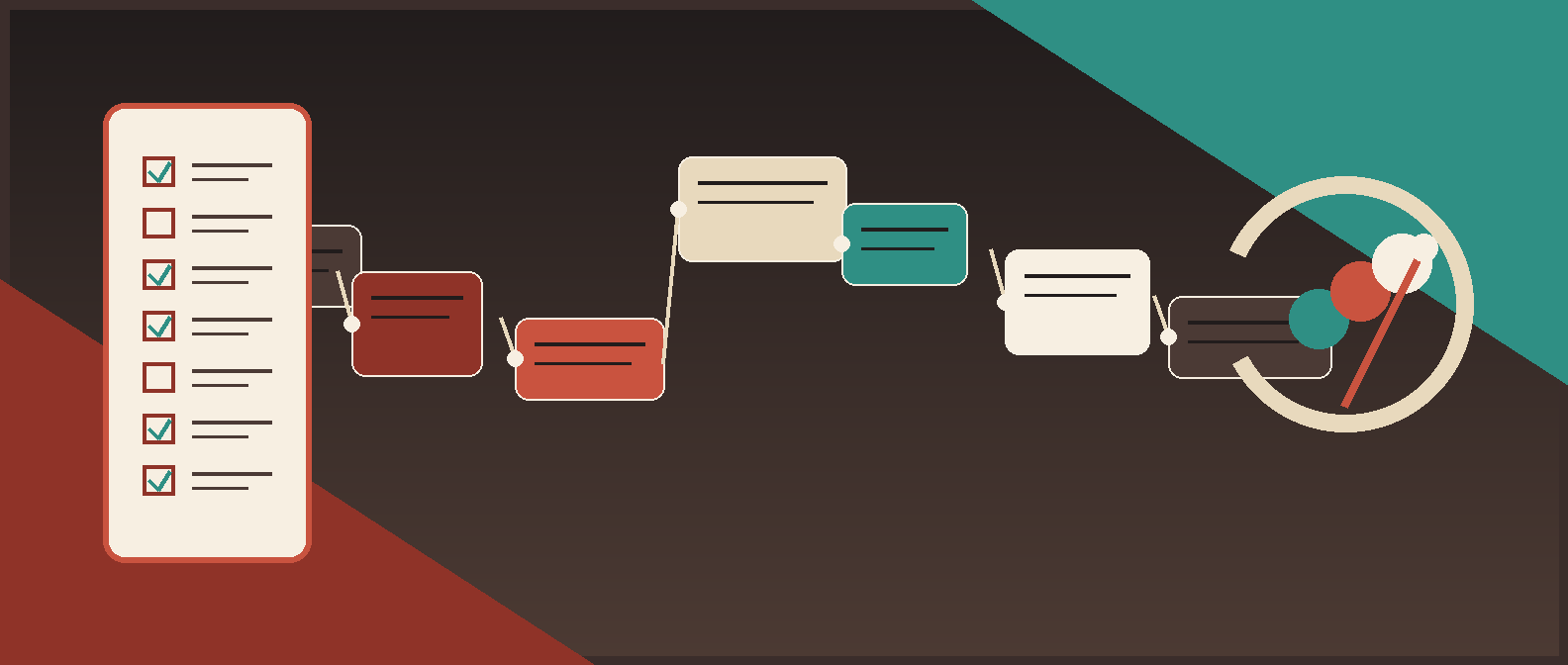
*A workflow-selection checklist for choosing marketing AI pilots by revenue impact, repeatability, data readiness, risk, integration access, human review, and measurement.*
Why this choice matters now
AI is already inside marketing work. Gartner's 2026 CMO Spend Survey found that CMOs allocate 15.3% of marketing budgets to AI initiatives on average, while only 30% report mature or fully developed AI readiness capabilities. The ugly translation: money is moving faster than operating maturity.
McKinsey's 2025 State of AI survey tells the same story at the enterprise level. AI use is broadening, but most organizations have not embedded it deeply enough into workflows and processes to capture material benefits. Marketing and sales remain among the business functions where AI use is most commonly reported, but adoption is not the same as production impact.
HubSpot's 2026 marketing research shows why teams are tempted to start with content: 80% of marketers use AI for content creation and 75% use it for media production. That does not make content the best first production workflow. It makes content the most obvious place to create mediocre output at speed.
The first workflow should create operating leverage without putting brand trust, customer experience, or sales data quality through a wood chipper.
The workflow selection rule
Pick the first marketing AI workflow where all four statements are true:
- The work repeats every week. If it only happens once a quarter, it is not the first automation.
- The inputs are available. CRM records, campaign briefs, analytics exports, content assets, audience segments, or customer conversations are accessible without heroic manual cleanup.
- A human can review the risky parts. Customer-facing copy, audience rules, legal claims, scoring logic, and CRM updates need approval gates.
- The outcome can be measured in weeks. Time saved, routing speed, campaign cycle time, conversion rate, qualified leads, pipeline influenced, or rework reduction must be visible quickly.
That rule sounds basic because good workflow selection is basic. Most failed AI pilots are not mysteries. They are bad workflow choices dressed up as innovation.
The best first candidates
Start by listing candidate workflows in plain operator language. Not "AI-driven demand generation." Say what the work is.
| Candidate workflow | Why it can work | Main risk | Good first version |
|---|---|---|---|
| Lead enrichment and routing | Close to revenue, frequent, measurable, CRM-native | Bad routing damages sales trust | Enrich, score, and suggest owner; human reviews thresholds before auto-routing |
| Campaign reporting and insight triage | Low customer-facing risk, high recurring effort | Insight quality can be generic | Pull metrics, flag anomalies, draft commentary for marketer review |
| Lifecycle email personalization | Revenue-tied and repeatable | Bad segmentation or creepy personalization | Draft variants from approved segments and examples; human approves send logic |
| Content repurposing | Uses existing assets and saves time | Brand voice dilution | Repurpose approved webinars, reports, or posts into drafts for human editing |
| Paid media creative QA | Clear rules and high frequency | False positives annoy the team | Check ads against brand, claim, URL, UTM, and landing-page rules |
| Webinar or event follow-up | Time-sensitive and revenue-linked | Generic outreach hurts conversion | Summarize attendee signals and draft follow-up by segment |
| SEO and AEO brief generation | Useful for research-heavy teams | Commodity content briefs | Generate structured briefs from source material, customer language, and internal POV |
For most B2B teams, the strongest first bet is lead enrichment and routing if CRM data is usable. It is close to revenue, measurable, and easy to scope with controls. If the CRM is messy, start with campaign reporting and insight triage or content repurposing from approved source material while the data foundation gets fixed.
The scoring checklist
Score each candidate from 1 to 5. Multiply by the weight. The highest score is not automatically the winner, but anything below 70 should not be your first production workflow.
| Criterion | Weight | Score 1 | Score 3 | Score 5 |
|---|---|---|---|---|
| Revenue or capacity impact | 4x | Nice-to-have | Saves time or improves one funnel step | Tied to pipeline, conversion, cycle time, or meaningful team capacity |
| Repeatability | 3x | Irregular work | Weekly recurring | Daily or high-volume workflow |
| Process clarity | 3x | Different every time | Mostly consistent | Clear trigger, inputs, outputs, owner, and exception path |
| Data readiness | 4x | Data is missing or unreliable | Usable with cleanup | Accessible CRM, analytics, campaign, audience, or content data |
| Integration path | 3x | Manual copy/paste only | Export/import or partial API | CRM, MAP, CMS, warehouse, analytics, or inbox access is available |
| Brand, legal, and customer risk | 4x | High-risk customer-facing action | Reviewable draft or recommendation | Internal assistive workflow or strong human approval gate |
| Measurement readiness | 3x | No baseline | Estimated baseline | Current volume, time, conversion, SLA, or quality metric exists |
| Adoption readiness | 2x | Team is skeptical or overloaded | Owner is interested | Named owner and operators want the workflow fixed |
| Reusability | 1x | One-off | May transfer to adjacent campaigns | Creates a pattern for other marketing workflows |
Score interpretation
| Score | Recommendation |
|---|---|
| 85-100 | Build the pilot. Define controls, owner, and success metric now. |
| 70-84 | Good first candidate if the top risk is scoped tightly. |
| 55-69 | Run a readiness sprint before implementation. |
| Below 55 | Do not start here. Pick a smaller or cleaner workflow. |
Use this as the marketing companion to the broader AI automation readiness scorecard. The broader scorecard tests operational readiness; this checklist tests whether the marketing use case is worth being first.
What not to automate first
Some workflows are useful later but terrible as the opening move.
Do not start with fully automated content publishing
AI content production is common, but brand risk compounds quickly. HubSpot's 2026 research points to a real tension: marketers are using AI heavily for content, while differentiation and brand point of view matter more as AI output floods the market.
Start with content briefs, research synthesis, repurposing, metadata drafts, internal summaries, or first-pass variants. Keep a human in charge of final claims, examples, source selection, voice, and publish approval.
Do not start with autonomous outbound
Automated outbound can create pipeline or create a reputation problem at machine speed. If you start here, keep the first version narrow: account research, signal detection, draft personalization, and prioritization. Do not let the system spray generic messages because the demo looked clever.
Do not start with executive reporting theatre
AI-generated dashboards and commentary can be useful, but only if leaders make decisions from them. If the workflow does not change budget, campaign action, sales follow-up, or customer experience, it is probably not the first automation.
Do not start where the data owner is absent
If marketing needs CRM access, sales needs routing control, RevOps owns lifecycle stages, and nobody can agree on definitions, stop. Map the workflow first. The AI agent workflows primer is useful when teams need to understand how tool access, routing, and approval gates fit together.
A practical decision tree
Use this decision tree in a 60-minute selection workshop.
| Question | If yes | If no |
|---|---|---|
| Does the workflow happen every week? | Keep scoring | Reject as first pilot |
| Does it affect pipeline, conversion, cycle time, or team capacity? | Keep scoring | Use only if strategic learning is unusually high |
| Are the inputs accessible? | Keep scoring | Run a data-access sprint first |
| Is the process clear enough to describe in 10 steps or fewer? | Keep scoring | Audit the workflow before automation |
| Can a human review risky outputs? | Keep scoring | Redesign with approval gates |
| Can success be measured within 30 to 45 days? | Pilot candidate | Choose a more measurable workflow |
Marketing teams love vague ambition. This workshop exists to kill it before it becomes a six-tool mess.
Example 1: lead enrichment and routing
A B2B marketing team wants AI to qualify inbound demo requests, enrich accounts, summarize buyer intent, and recommend routing.
| Criterion | Score | Reason |
|---|---|---|
| Revenue impact | 5 | Faster routing can improve sales response time and pipeline follow-up. |
| Repeatability | 5 | Demo and contact requests arrive every week. |
| Process clarity | 4 | Existing routing rules exist, but exceptions need cleanup. |
| Data readiness | 3 | CRM and form data exist; enrichment quality varies. |
| Integration path | 4 | CRM, form platform, and Slack or email alerts are accessible. |
| Risk | 4 | AI can recommend; humans or rules approve final routing at first. |
| Measurement | 5 | Speed-to-lead, accepted leads, conversion, and pipeline can be measured. |
| Adoption | 4 | Sales wants cleaner handoffs. |
| Reusability | 4 | Same pattern can extend to event leads and content leads. |
Verdict: strong first workflow. Start with AI-assisted enrichment, buyer-intent summary, duplicate detection, and owner recommendation. Do not auto-change lifecycle stages until the team trusts the review data.
Example 2: content repurposing
A content team wants AI to turn webinars, sales calls, and long reports into blog outlines, LinkedIn drafts, email snippets, and sales enablement summaries.
| Criterion | Score | Reason |
|---|---|---|
| Revenue impact | 3 | Helps capacity, but attribution may be indirect. |
| Repeatability | 4 | Source assets are produced regularly. |
| Process clarity | 3 | Current repurposing workflow is informal. |
| Data readiness | 4 | Recordings, transcripts, decks, and brand docs exist. |
| Integration path | 3 | CMS and social scheduling may still be manual. |
| Risk | 3 | Brand and claim risk require human review. |
| Measurement | 3 | Throughput is measurable; pipeline impact is harder. |
| Adoption | 5 | Team feels the production bottleneck. |
| Reusability | 5 | Pattern applies across many campaigns. |
Verdict: useful first workflow if the goal is capacity, not immediate revenue proof. Keep the first version as a drafting and QA assistant. Require source links, brand voice checks, and editor approval before anything reaches a public channel.
Example 3: campaign reporting and insight triage
A demand generation team wants AI to pull weekly campaign data, flag changes, draft performance notes, and recommend follow-up actions.
| Criterion | Score | Reason |
|---|---|---|
| Revenue impact | 4 | Better decisions can improve spend allocation and conversion. |
| Repeatability | 5 | Reporting happens weekly. |
| Process clarity | 4 | Campaign review has a consistent meeting rhythm. |
| Data readiness | 3 | Data exists but naming, UTMs, and attribution need cleanup. |
| Integration path | 3 | Analytics exports are accessible; direct API access may come later. |
| Risk | 5 | Internal workflow with low customer-facing risk. |
| Measurement | 4 | Time saved and action follow-through can be measured quickly. |
| Adoption | 4 | Marketers hate manual reporting. Correctly. |
| Reusability | 4 | Pattern extends to paid, lifecycle, content, and event reporting. |
Verdict: a very good first workflow when CRM quality is not ready for lead routing. It creates trust with lower risk and exposes the data cleanup needed for higher-value automations.
Build the first version like a workflow, not a magic agent
Anthropic's guidance on effective agents makes a useful distinction: workflows follow predefined code paths, while agents dynamically decide their own process and tool use. For a first marketing automation, choose the boring option first.
A strong first version usually looks like this:
- Pull the trigger event: new lead, campaign report due, webinar transcript ready, ad launched, segment updated.
- Retrieve approved context: CRM fields, campaign brief, brand rules, audience segment, prior examples, source content.
- Run the AI step: classify, summarize, enrich, draft, compare, or flag.
- Apply deterministic checks: missing fields, disallowed claims, UTM rules, segment rules, confidence thresholds.
- Route to human review: marketer, RevOps owner, legal reviewer, sales leader, or campaign owner.
- Write the approved output: CRM note, draft email, campaign insight, task, brief, routing recommendation, or content draft.
- Log the result: input, output, reviewer, approval, timestamp, and performance outcome.
That architecture is less glamorous than "autonomous marketing agent." It is also the version that survives contact with brand, RevOps, and sales.
Define the human review gate before you build
Marketing workflows touch trust. That means approval design is not admin. It is product design.
| Workflow action | Human review rule |
|---|---|
| Drafting customer-facing copy | Human approves before publish or send |
| Changing lead score or routing logic | RevOps approves threshold changes |
| Segmenting customers or prospects | Marketing owner validates audience rules |
| Making legal, compliance, or performance claims | Legal or executive owner approves claim library |
| Updating CRM fields | Start with suggested updates; move to auto-write only after QA |
| Sending outbound messages | Human approval until reply quality and complaint risk are measured |
| Summarizing campaign performance | Human validates recommendations before budget changes |
NIST's AI Risk Management Framework is useful because it pushes teams to map, measure, manage, and govern risk. For marketing operators, that means knowing what the AI can touch, where a human approves, how mistakes are caught, and who owns the workflow after launch.
Measurement: what proves the pilot worked
Do not declare victory because the team "likes using AI." Measure the workflow.
| Workflow | Baseline metric | Pilot success metric |
|---|---|---|
| Lead enrichment and routing | Time from form fill to assigned owner | Faster routing, higher accepted lead rate, better conversion to meeting |
| Campaign reporting | Hours spent building weekly report | Hours saved, anomalies caught, actions created, spend decisions improved |
| Lifecycle personalization | Email build time and conversion rate | Faster variant creation, lift in CTR or conversion, lower unsubscribe risk |
| Content repurposing | Hours per derivative asset | More approved assets per source piece, editor time saved, quality pass rate |
| Paid creative QA | Errors found after launch | Fewer broken links, UTM issues, disallowed claims, or off-brand variants |
| Event follow-up | Time from event to first follow-up | Faster follow-up, more relevant messaging, higher meeting conversion |
Jasper's 2026 State of AI in Marketing report is a useful warning here: as AI moves into core marketing operations, productivity gains alone are no longer enough. Leadership expects measurable business outcomes. That is exactly right. A first pilot should save time and point toward revenue, not merely produce more stuff.
The 14-day first workflow plan
Use two weeks to get from selection to pilot design.
| Day | Work |
|---|---|
| 1 | List 5 to 8 candidate marketing workflows. |
| 2 | Score each workflow with the selection checklist. |
| 3 | Pick the top candidate and name the owner. |
| 4 | Pull 20 real examples from CRM, campaign reports, transcripts, briefs, or content assets. |
| 5 | Map trigger, inputs, systems, outputs, exceptions, and review gates. |
| 6 | Define what AI can draft, classify, enrich, summarize, or recommend. |
| 7 | Define what AI cannot do without approval. |
| 8 | Confirm integration path and data access. |
| 9 | Create the evaluation set and quality rubric. |
| 10 | Baseline current volume, time, quality, conversion, or cycle time. |
| 11 | Design the first workflow path and exception path. |
| 12 | Build or prototype the narrowest version. |
| 13 | Test with historical examples and reviewers. |
| 14 | Decide whether to pilot, narrow, or reject. |
If that sounds too much for a first marketing automation, the workflow is not as simple as the team thinks. Good. Better to find that out before the system has permissions.
Linkable asset: First Marketing AI Workflow Selection Checklist
This article should become a downloadable checklist or worksheet with:
- candidate workflow inventory;
- weighted scoring table;
- risk and human-review checklist;
- CRM/MAP/CMS/data access checklist;
- 30-day measurement planner;
- sample scoring for lead routing, reporting, and content repurposing;
- pilot go/no-go decision tree.
The backlink angle is straightforward: most AI marketing content tells teams what is possible. This asset tells them what to automate first without wrecking brand trust or sales handoffs.
Red Brick Labs POV: automate the control layer first
The first marketing AI workflow should not replace marketers. It should move marketers into the control layer.
That means AI handles research, enrichment, summarization, classification, drafting, checks, routing recommendations, and reporting prep. Humans own judgment, positioning, approval, strategy, claims, audience rules, and final customer-facing action.
Red Brick Labs would usually start with one of three workflows:
- Lead enrichment and routing if CRM data is good enough.
- Campaign reporting and insight triage if the team needs fast, low-risk leverage.
- Content repurposing from approved source material if the bottleneck is production capacity and the brand review process is strong.
Everything else can wait. A first AI automation should make the marketing machine more disciplined, not louder.
Sources and research notes
This article synthesizes current public research and implementation guidance:
- Gartner 2026 CMO Spend Survey: AI budget allocation, readiness gaps, and CMO pressure to prioritize AI-enabled transformation.
- McKinsey State of AI 2025: broad AI adoption, uneven scaling, agent experimentation, and the gap between AI use and workflow-embedded impact.
- HubSpot 2026 State of Marketing Report: AI as baseline, content and media production adoption, brand POV, and human-led marketing.
- HubSpot State of Generative AI in Marketing: marketing AI use cases, personalization, productivity, AI referral traffic, and concerns about generic content.
- Jasper State of AI in Marketing 2026: operationalization, ROI measurement pressure, scaling challenges, and marketing AI roles.
- Anthropic: Building Effective Agents: distinction between workflows and agents, and the recommendation to start with the simplest architecture that works.
- NIST AI Risk Management Framework: risk management, trustworthiness, governance, and evaluation concepts applied here to marketing workflow controls.
- HubSpot 2026 Proxy Statement: examples of current CRM, Data Hub, AI personalization, segments, AEO, and data-quality direction in marketing technology.
Ready to choose the first workflow?
If your marketing team has a dozen AI ideas and no sane way to pick the first one, Red Brick Labs can run the workflow selection workshop with you. We will score the candidates, map the data and approval path, define the success metric, and ship the first production AI automation in weeks.
Book a 15-minute marketing AI workflow review, or email suri@redbricklabs.io.
Choose the first marketing AI workflow: Red Brick Labs can help your marketing team score the candidate workflows, map the data and approval path, and ship the first production AI automation with human review, CRM integration, and measurable ROI.